
Publications & talks
Published work.
Analysis and notes on European affairs and digital regulation. A body of work built over time, without a fixed schedule.
Analysis & articles
WAEMU's excellence scholarships: a policy of belonging
The 2026-2029 call for the WAEMU excellence scholarship programme closed on 30 August. Eighty laureates, modest amounts, one decisive condition: study within the Union. This analysis reads a small programme as a large question — that of integration through belonging, in the mirror of Erasmus: can a regional community be made through the university, and at what scale does a symbol become a policy?
What restoring means - The European rule of law after the Hungarian alternation
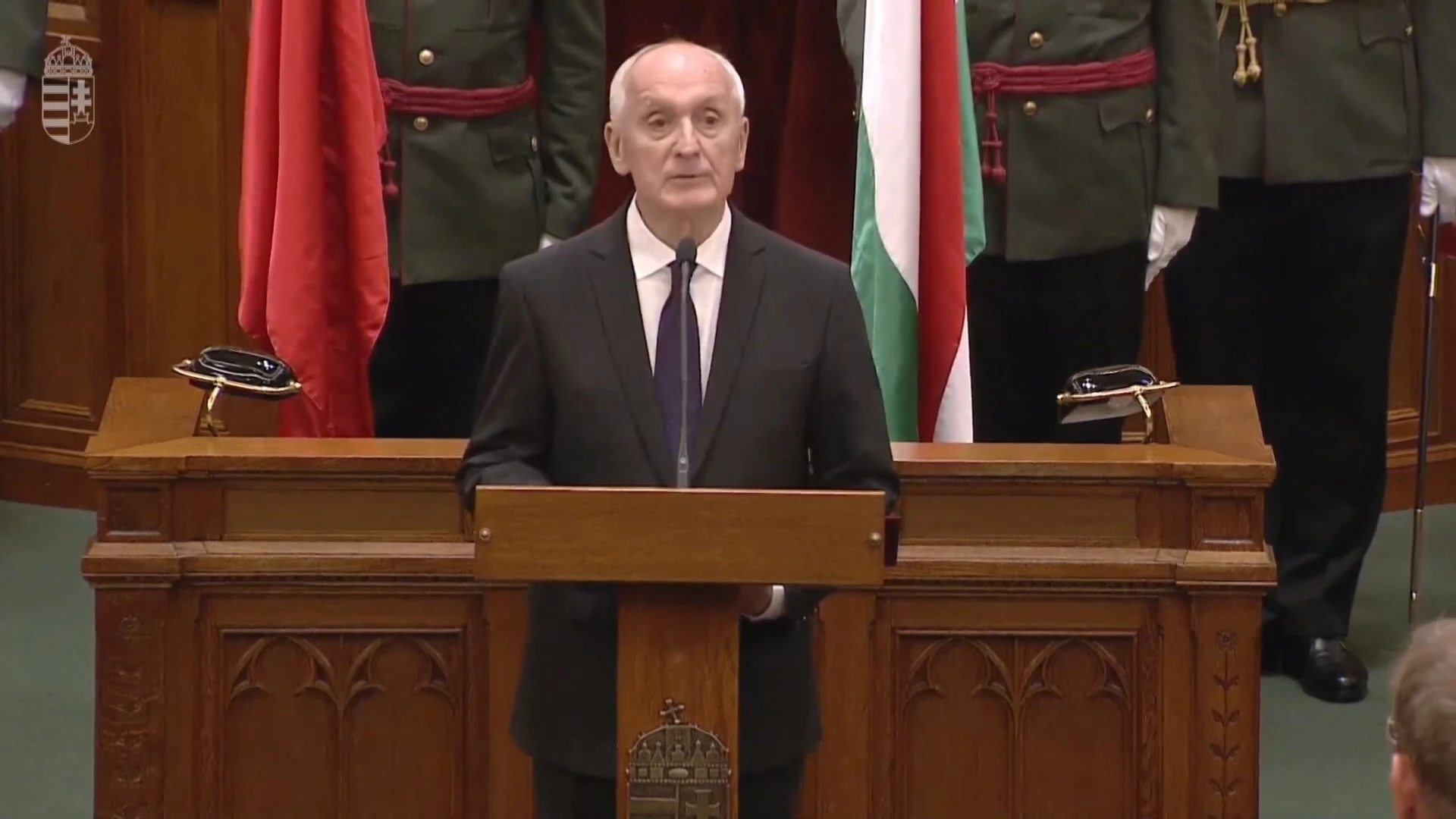
By 31 August 2026, Hungary's Magyar government must have delivered proof of the "super-milestones" agreed with the European Commission for the release of 16.4 billion euros: judicial independence, anti-corruption safeguards, public procurement. At the same moment, Donald Tusk's Poland, engaged in the same enterprise since December 2023, remains blocked by presidential veto. These two simultaneous restorations — one equipped with a constitutional majority, the other deprived of any means of acting through statute — form a natural experiment such as European law has never possessed. We draw from it a question the treaties never anticipated: does undoing a legal capture of the state require using the very instruments of capture, and under what conditions does that enterprise remain a restoration rather than a revenge? The answer engages less Hungary and Poland than the credibility of the European instruments that claim to measure both.

Low-cost authoritarianism - What the Argentine case teaches about AI surveillance
The report published by Amnesty International on 18 August 2026 documents the expansion of mass surveillance technologies in Argentina: 1.2 million dollars of acquisitions between 2024 and 2025, an artificial intelligence unit tasked with "predicting" disturbances, journalists and pensioners who self-censor. This contribution argues that the analytical interest of the case lies neither in its scale, which is modest, nor in its exoticism, which is non-existent: it lies in its procedure. Argentina's surveillance infrastructure was instituted not by emergency legislation but by ministerial resolutions, without parliamentary passage, at a cost below that of a roundabout. The case thus displays three displacements — from statute to regulation, from investigation to patrol, from event to infrastructure — none of which is specific to Argentina, and against which Europe is protected only by procedural safeguards it is itself currently testing.
Two regimes for the same companies - Washington, Brussels and the regulation of frontier models
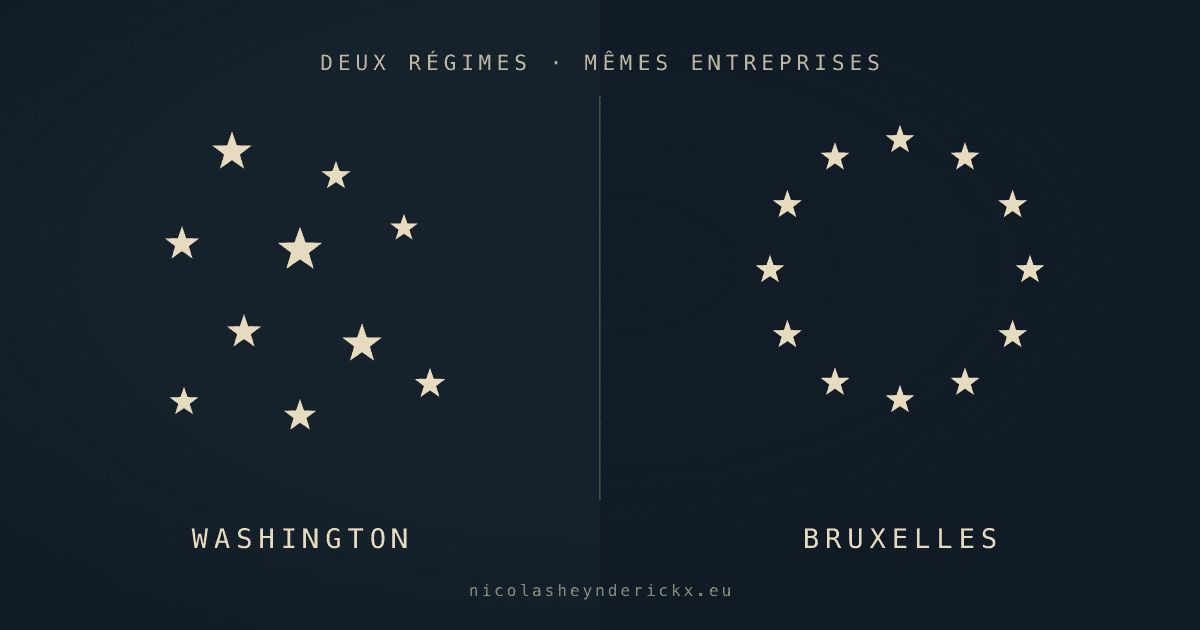
At the turn of August 2026, three consecutive days displayed two opposing ways of governing the same five companies. On 1 August, the deadline set by US Executive Order 14409 expired without any public deliverable. On 2 August, the European AI Office acquired its full powers of sanction over providers of general-purpose AI models. On 4 August, the White House convened Meta, OpenAI, Google and Anthropic around a voluntary review framework. This contribution compares the two trajectories along three axes — the criterion that designates the companies concerned, the legal form of the constraint, and the level at which it is exercised — and argues that they are not answering the same question.

Brussels and the False Economy
On 31 July, the Brussels Region suspended, as of 12 August, several forms of business support — advice, training, recruitment, coworking — for lack of budget. The cut is defensible; its method, in twelve days and without consultation, far less so. A position piece on the penny-wise economy of cutting the cheapest and most useful lever.
A partnership without constraint - What the overhaul of the EU's external budget changes in the relationship with Africa
The collapse of official development assistance in 2025 dominated public debate; the simultaneous overhaul of the European budgetary instrument went almost unnoticed. This contribution argues that the second phenomenon matters more than the first. What the proposed Global Europe instrument removes is not, in the first place, an amount of money, but a set of enforceable legal constraints — thematic targets, geographic floors, commitments towards the least developed countries — whose function was to make development policy legible and contestable. The discussion closes in the second half of 2026. It bears less on what the Union will give than on what its African partners, and its own Parliament, will still be able to require it to justify.
Lethal autonomous weapons: can the decision to kill be entrusted to a machine?
A weapon that, once activated, selects and strikes its targets without any human validating the shot: this is no longer a laboratory hypothesis. Behind the term "lethal autonomous weapons systems" (LAWS) lies one of the most dizzying questions of contemporary law — and the deadline the UN had set itself to regulate them, 2026, has arrived.

Transparency Is Not a Single Regime: The AI Act's Information Obligations Tested Against Their Implementation
The postponement of the obligations relating to high-risk systems, secured in June 2026, leaves in place on 2 August 2026 only the informational layer of Regulation (EU) 2024/1689. This accident of scheduling brings to light what scholarship most often treats as a unity: the transparency of the AI Act is not a homogeneous legal regime, but the assembly of at least three regimes distinct in their addressees, their required content, their timing and their sanction regime. The analysis of this stratification leads to a second proposition: the effectiveness of these obligations is a property neither of the norm, nor of the regulated organisation, nor of the technical device that gives it form, but of the triangle they compose. It is therefore played out largely outside the text — in the documentary practices of regulated actors and in the work of a layer of private intermediaries that fixes, upstream of any authentic interpretation, what the obligation is deemed to require.

The City, Battlefield of the 21st Century: Why the Law Struggles to Protect Civilians
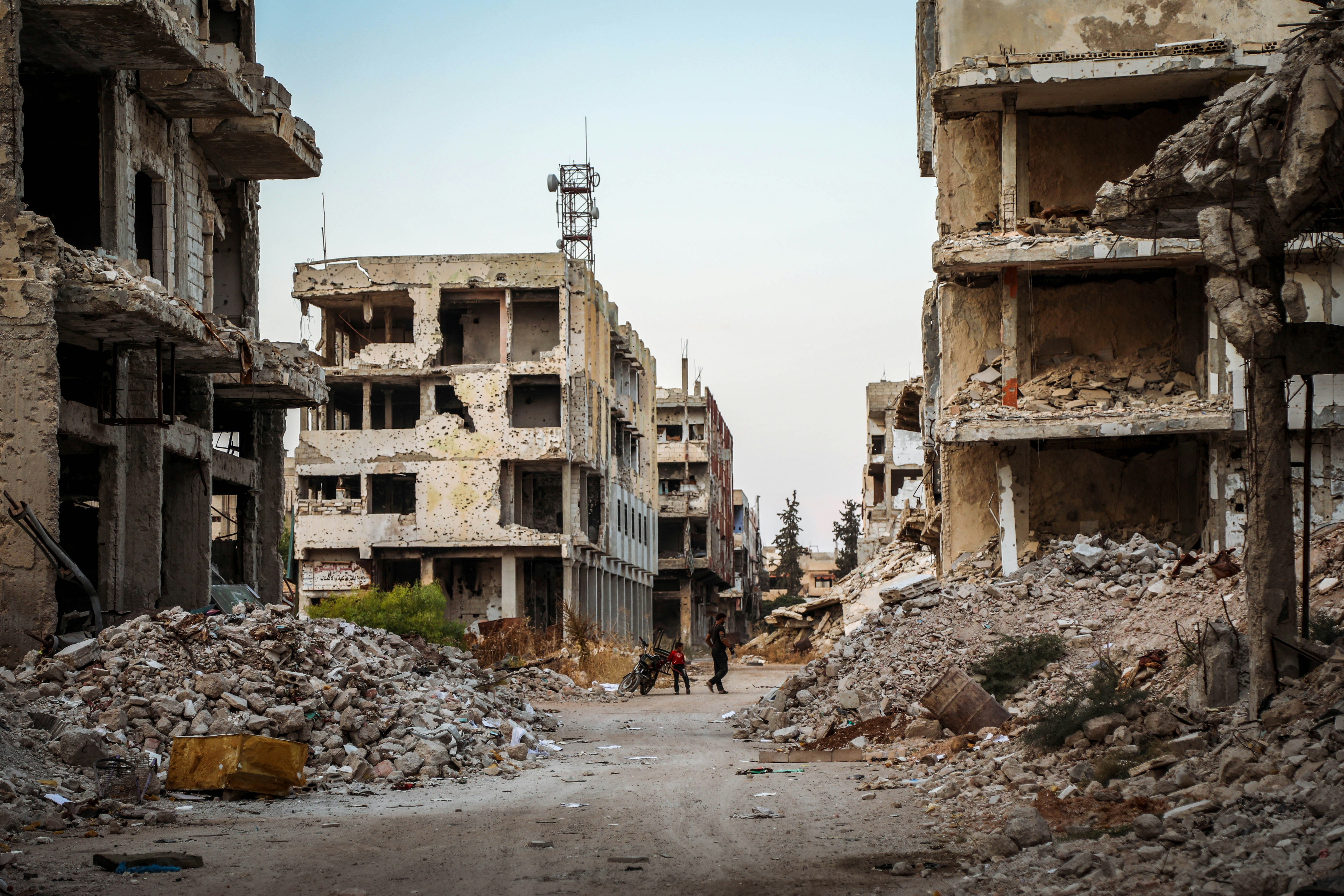
From Mosul to Aleppo, from Gaza to the cities of Ukraine, war has moved into the heart of the city. Yet it is precisely there that the principles of international humanitarian law — distinction, proportionality, precaution — are hardest to uphold.

The Sovereign Mind and the Machine - What the Legal Protection of the Forum Internum Owes to a Philosophy That Rejects It
The Randian moral grammar, widely diffused through the entrepreneurial culture of digital technology, makes independence of judgment the condition of individual dignity and public regulation an illegitimate constraint. This contribution argues that this position runs into an internal difficulty. By positing the sovereign subject as a natural given that need only be left unhindered, objectivism deprives itself of the means to think through the institutional conditions of its emergence. Analysing the protection of the forum internum in international human rights law, and its first positive translation at the scale of the European internal market through Article 5 of Regulation (EU) 2024/1689, allows the opposite hypothesis to be formulated: the prohibition of manipulation does not limit cognitive sovereignty, it constitutes its infrastructure. The article then examines the limits of this protection, whose high threshold leaves outside its scope the phenomenon best documented empirically — the ordinary, voluntary and non-manipulative erosion of judgment through cognitive delegation.
What Remains to the King: The Belgian Monarchy and the Function of Unity
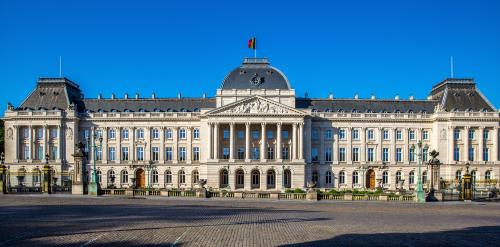
The King does not govern, does not decide, signs nothing that a minister has not countersigned. Yet his function becomes visible again every time the country struggles to give itself a government. This analysis examines what actually remains of the Crown in law, what it continues to do in practice, and advances a hypothesis: in a federation whose bonds are fraying, the usefulness of the monarchy lies less in what it can do than in what it occupies. Whether a symbol can bear that weight is another question.
The Belgian Senate Facing Its Abolition: From Institution to Function
On 2 July 2026, the Chamber cleared the way for the abolition of the Senate: federal monocameralism, a first since 1831. This analysis distinguishes two questions the debate conflates — the repeal of an institution already hollowed out by the 2014 reform, and the function that a second chamber fulfils in a federal state. It also interrogates the method: revising the Constitution through the transitional route, on the contested model of 2012. Reducing the number of chambers is not yet reforming a federation.

The AI Act and the shift in Europe’s regulatory paradigm: towards a normativity based on risk and compliance
The AI Act does more than govern artificial intelligence: it reveals a deep transformation of European regulatory law. By replacing a logic of sanction
Securitising artificial intelligence
Sovereignty, political discourse and the legitimation of algorithmic power in Europe and the United States (2020–2025). Between 2020 and 2025, artificial intelligence moved from
“Easy Rider”, an ode to freedom?
On Wednesday 4 June 2025, the Cinematek – or Royal Belgian Film Archive for purists of the seventh art – screened Easy Rider, Dennis Hopper’s first film as

Liberalism and expression: a right in evolution
This analysis examines the relationship between liberalism and freedom of expression, underlining their importance in democracies. Although this freedom is considered fundamental,

Inauguration speech of the 47th President of the United States: the key points.
Donald Trump comes out swinging on his return: walls, oil, Mars and binary gender. Between tough talk on the cartels, withdrawal from the Paris Agreement, tariffs across the board, and

Belgium, a state in a state of flux
Belgium, a state in a state of flux: between political deadlock and social tension. As so often, our flat country is once again facing a crisis
“Chez Nous” and everywhere else: populism and its dangers for Europe
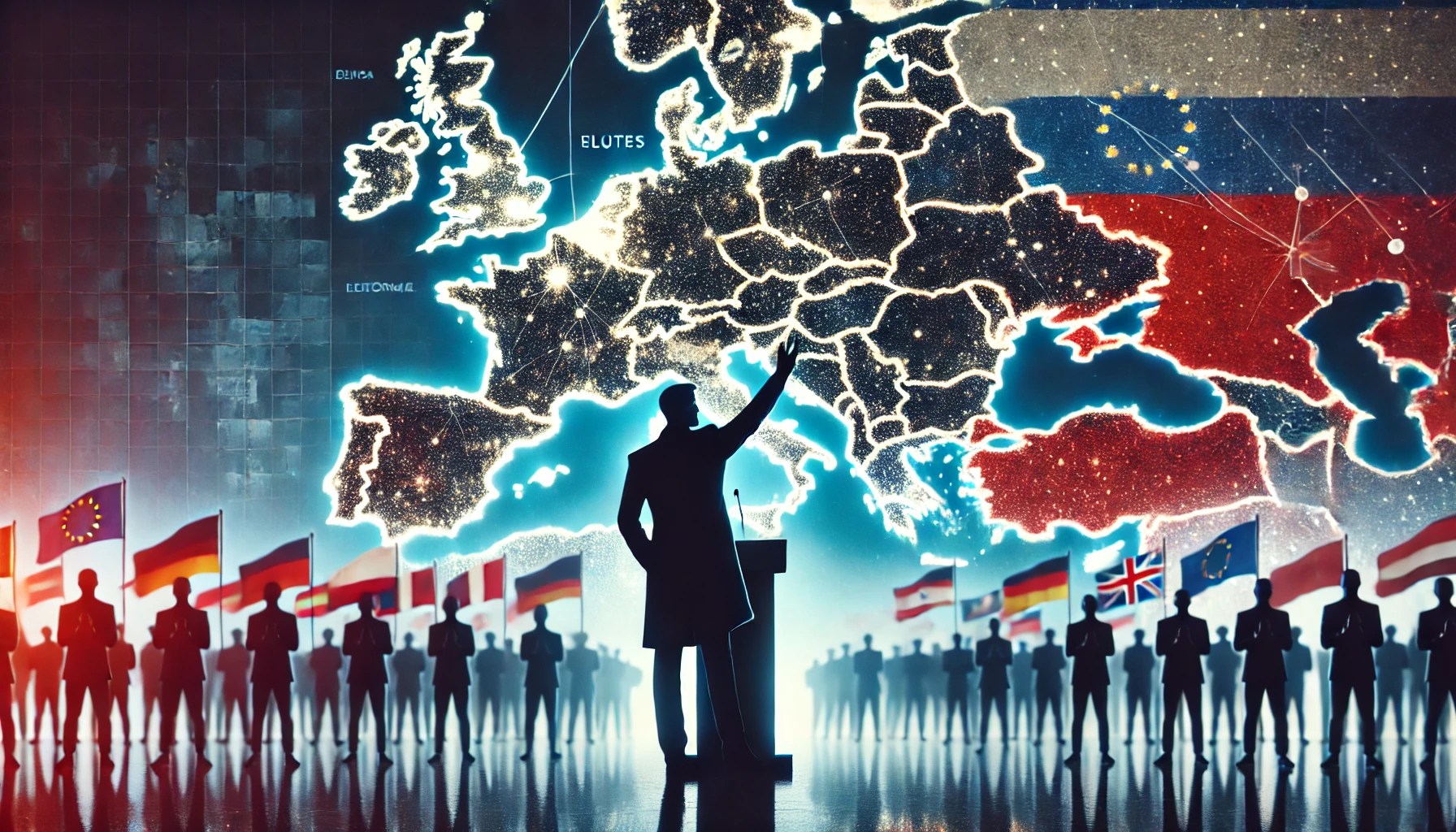
In 2025, populism is redefining Europe, amplifying the divisions between elites and citizens. This article explores the causes and impacts of this rise, symbolised by a leader
Watch notes
Short notes, tracking European regulatory news.
No publication matches this search.